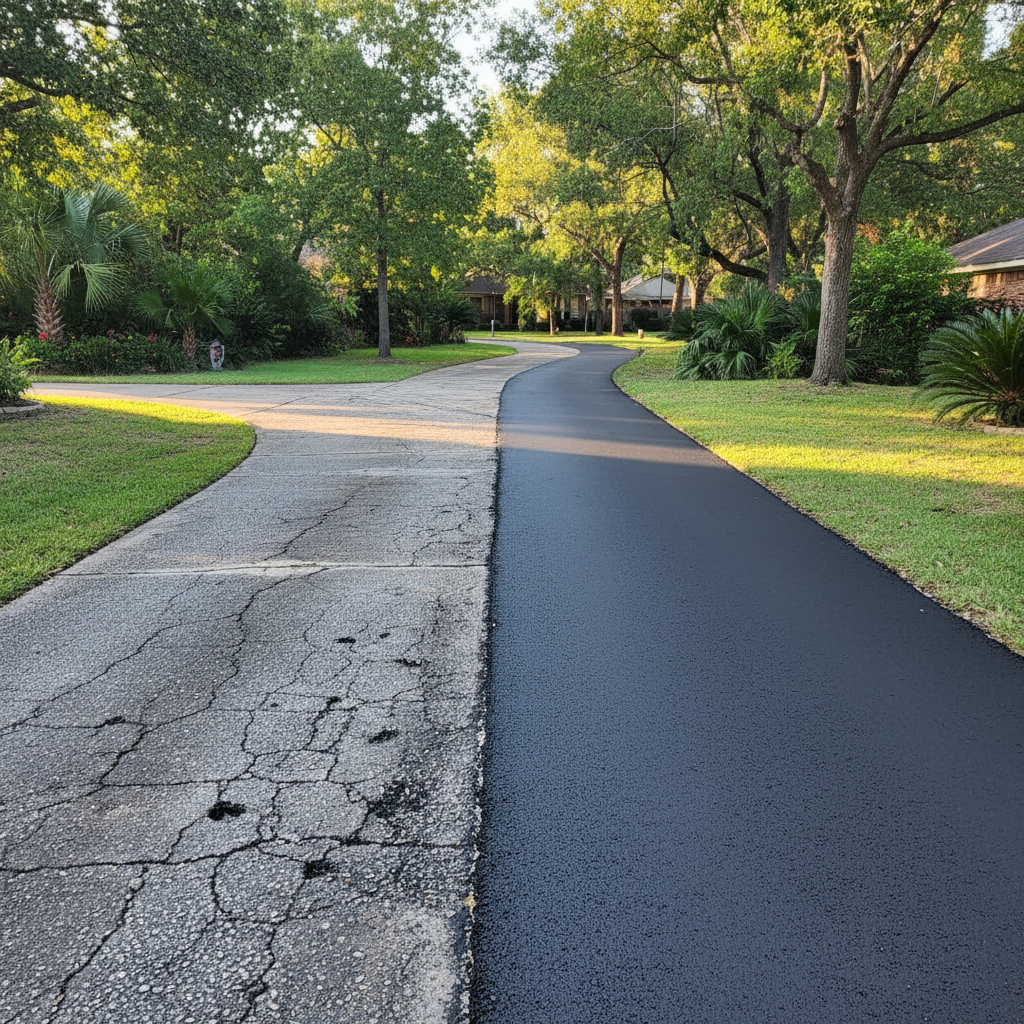
Your asphalt driveway won't last forever, especially with our Texas heat and those heavy rains we get. Eventually, you'll start seeing cracks, maybe a pothole or two. When that happens, you've got a couple of main ways to fix it: patching or sealing. Folks often mix these up, or think one does the job of the other. Let's clear that right up.
Asphalt Patching: When You've Got Real Damage
Patching is what you do when your asphalt has actual, structural damage. Think potholes, deep cracks that have started to crumble, or spots where the asphalt has completely broken away. You can't just pour a sealer over a pothole and expect it to hold; that's like putting a band-aid on a broken leg, isn't it?
Cost & Durability
Patching usually costs more upfront than just sealing. Why? Because you're actually taking out the damaged section, getting the base underneath ready (which water might have messed with), and then filling it with new, hot asphalt. It's a more involved process. But, when it's done right, a good patch can last for years. It's meant to bring back the pavement's strength in that specific spot.
Maintenance & Appearance
Once a patch is in, it needs to cure, just like a brand new driveway. You'll want to keep heavy traffic off it for a little while. As for how it looks, a patch will almost always look like a patch. It'll be a different color and texture from your existing asphalt, especially if your driveway is older and faded. You can try to sealcoat over it later to help it blend, but you'll still see the outline. It's functional, not necessarily pretty.
Asphalt Sealing: Protecting Your Investment
Sealcoating is a preventative measure, kind of like putting sunscreen on your skin or painting your house. It's not meant to fix structural problems. What it does is protect your asphalt from the elements: UV rays, water getting in, oil spills, and just general wear and tear. It works best on asphalt that's in decent shape, maybe with some minor hairline cracks, but definitely no major potholes or crumbling areas.
Cost & Durability
Sealing is much cheaper per square foot than patching. It's a surface application, not a deep repair. However, it's also not a permanent fix for anything. A good sealcoat job, done every 2-3 years, can really extend your driveway's life. It keeps the asphalt flexible, stops water from seeping into the base and causing freeze-thaw damage (though we don't get much freezing here in Humble, water still erodes the base), and protects against oxidation.
Maintenance & Appearance
After sealing, you need to stay off the driveway for at least 24-48 hours, sometimes longer depending on the weather. It just takes time to cure properly. The biggest benefit of sealing, besides protection, is how it makes your driveway look. It brings back that rich, black color, making your whole property look sharper. It also fills in those tiny hairline cracks and gives everything a uniform appearance.
So, Which One Do You Need?
Here's the deal: you probably need both at different times. If you've got real holes or areas where the asphalt is breaking apart, you absolutely need to patch those first. Don't even think about sealcoating over them. Those patches will stabilize the area and keep the damage from spreading.
Once those structural repairs are done, and your driveway is mostly solid, then you can think about sealcoating. A good sealcoat will protect your newly patched areas and the rest of your driveway, making everything last longer and look better. Think of it as a two-step process for a healthy driveway.
For us here in Humble, with our clay soils and the way water can sit after a big storm, stopping water from getting in is super important. Sealcoating helps a ton with that by keeping water out of the sub-base and weakening your pavement. It's a smart investment, really.
At Coastal Asphalt Co, we often suggest a combination approach. We'll come out, check the damage, and give you an honest opinion. We'll patch up the bad spots, then once those are solid, we can apply a fresh sealcoat to protect your entire driveway. It's the best way to get the most life out of your asphalt without tearing everything out and starting over.
Don't wait until those small cracks turn into big problems. Get those repairs done right, and your driveway will serve you well for years to come.